Description
Catalog# 7699 1930s-1950s Japanese Textiles:
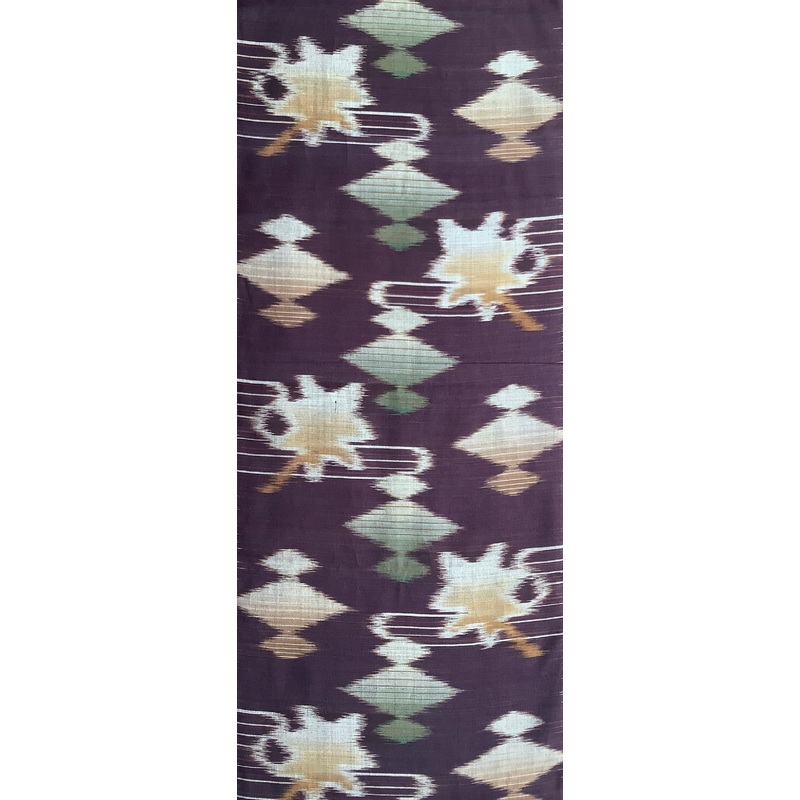
Deadstock Japanese Kimono Meisen Silk Fabric Piece
Mimics Traditional E-Gasuri (Picture-kasuri)Patterns
of leaves, diamond shapes, water
Width: 14 inches / 35.56 cm
Length: 62 inches / 157.48 cm
US per piece plus shipping Item Details and Description
Fabric History/Pedigree: 1950s or earlier silkfabric piecesfrom a deadstock roll found with other similar old fabrics.
Fabric Description:Meisen silk, lightweight, translucent with thebackground color of dark chocolate brown (not quite Hershey Chocolate Brown); This fabric was made to look like traditional kasuri(Ikat), even an e-gasuri(picture kasuri) patterns of diamonds, leaves and classic designs of water; Kasuri is a predominantly cotton process; colors of the patterns are in a wide range of brown hues, also light gray and some light pastel greens, olive-greens; also the pinstripes across(weft); this design has the intentionally fuzzy edges to all figures & lines, as seen in kasuri;minimal sheen.
Colors: Please NOTE that colors and contrast differ on each device, so please use our text descriptions to complement your sense of the fabric.
Condition: Excellent.
Recommended for making scarf/accessories.
Background Information on Meisen Kimonos:
Meisen is defined literally in our Kenkyuusha dictionary ascommon silk stuff;meisen fabrics (or garments made from them) are currently called meisen; Meisen kimono were made similarly toKasuri(ikat), thoughmeisenusually have very colorful patterns with distinct often more modern motifs and a slight sheen; 1950s meisen have intentionally fuzzy, almost Impressionistic look and often larger designs; Kasuri/ikat, of course, is mostly indigo blue and some white with learn more about kasuri click here.
To see pictures of meisen silk vintage kimonos from Google, touch HERE.
Other Cultural Notes: The best discussion weve found of Meisen silk fabric was on an old blog post by Japundit, excerpted here*:
Young women have rediscovered(Japan Times) thekimono, and you can see them out in Harajuku on the Sunday fashion parade. Theres even a term for these girls not surprisingly they are called kimonogirls. There are even some nice books documenting the trend which you can check out at J-List and are definitely worth having if you are at all into fashion.
Themeisen kimonoin particular has become very popular. Thesekimonowere made in the first half of the twentieth century, and were characterized by a glossy sheen, and brilliant patterns. There is often a sort ofblurryquality to the silks.
[*original article has been pulled]
Top
Reviews
There are no reviews yet.